

A Catholic wedding abroad: church and civil steps in the Algarve
A Catholic wedding abroad in the Algarve involves 2 connected arrangements: preparing with the Church and completing the Portuguese civil paperwork. LAW: the marriage gains civil effects when it enters the civil register; ADVICE: start by confirming the Algarve church and priest, then ask your home parish how to prepare and send your papers.[1][2]

Can we have a Catholic church wedding in the Algarve from Ireland?
A Catholic wedding abroad in the Algarve is a route to explore through your home parish and the receiving Church authorities. ADVICE: Claire and Conor should first confirm the destination church, date and authorised priest, then coordinate the home preparation and Portuguese civil file.[9][2]
LAW: Portugal recognises civil effects of a canonical marriage when its entry is transcribed into the civil register. Irish DFA guidance also requires destination civil registration and compliance with legal formalities for recognition in Ireland.[1][10]
The labels matter here. LAW identifies the civil requirements supported by official state sources. ADVICE — Church process identifies parish or diocesan instructions and how to plan around them; it does not mean you can ignore the Church's requirements for a Catholic marriage.
ADVICE: compare an ordinary registry ceremony first if your priority is the smallest administrative spend. If a Catholic marriage is your preference, budget its church preparation and ceremony separately from civil registration and the reception. IRN's ordinary and special-service tariff categories, checked on 12 November 2026, are not church package prices.[11]

Who confirms the Algarve church and the priest?
ADVICE — Church process: the Diocese of Cork and Ross tells couples marrying abroad to establish that the destination church and officiant are authorised by the local diocese. The Diocese of Algarve publishes its Chancellery contact in the official Cúria Diocesana directory.[9][12]
Ask for confirmation of the actual parish, church building, date, time, language and officiant. If you hope to bring a priest from Ireland, raise that before assuming the local permission covers him. A planner's venue availability check and a parish's acceptance of a marriage are separate confirmations.
UNKNOWN: a complete, current Algarve-wide document checklist, transfer deadline, approved preparation-course list, translation policy and church tariff have not been verified. The checked Chancellery directory supplies a contact route, not those answers.[13]
ADVICE: obtain those particulars for the parish handling your marriage. Keep the written reply with the church file, then arrange transport and reception timings around the confirmed appointment. Avoid making other bookings depend on an unconfirmed church slot.
What papers does our Irish home parish need?
ADVICE — Church process: use the checklist from your own parish and diocese. Cork and Ross provides a useful example: each Catholic completes a Prenuptial Enquiry Form with a priest from the current parish, and preparation includes the relevant sacramental and freedom records.[14]
| Church document | Parish instruction | Separate civil item |
|---|---|---|
| Prenuptial enquiry | Current parish priest[14] | Portuguese marriage application |
| Baptism certificate | Issued within 6 months before wedding[15] | Civil birth certificate |
| Confirmation record | Unless recorded on baptism certificate[16] | Identity document |
| Freedom letters | Parish-history evidence[17] | DFA freedom-to-marry certificate |
| Preparation certificate | Approved marriage preparation[18] | Civil capacity evidence |
The timing in this table was checked on 12 November 2026. ADVICE: do not transfer the baptism-certificate age rule to your civil birth record, or assume a parish letter replaces the Irish government certificate.
Ask the priest to identify gaps before ordering duplicate certificates. List the parishes where you have lived and let the home diocese apply its own evidence rules. If you have different religious backgrounds, ask how each person's enquiry is completed instead of copying one partner's papers.
How much time should we allow for the church file?
ADVICE — Church process: Cork and Ross says to meet the priest to complete papers at least 4 months before the wedding. Its baptism certificate must have been issued within the preceding 6-month window. Both instructions were read on 12 November 2026.[19][15]
Those periods serve different purposes. One gives room to prepare and send a file; the other limits the age of a particular certificate. ADVICE: confirm the destination deadline first, then schedule preparation, document collection and transfer so all records remain usable.
For a UK example, East Anglia requires 6 months' notice of an intended church marriage and aims for papers to reach the receiving diocese about 4 weeks before the wedding. These are that diocese's published instructions, checked on 12 November 2026, not a universal Algarve processing promise.[20][21]
ADVICE: track the movement of the approved file. Cork and Ross describes sending checked papers to the destination bishop's office for permission and onward transmission. Ask who confirms receipt at each handover, particularly if the wedding date changes.[22]
What if one of us is not Catholic or has married before?
ADVICE — Church rules: a marriage between a Catholic and a baptised non-Catholic requires express permission under canon 1124. A Catholic marrying an unbaptised person needs the dispensation described by canon 1086 for validity.[3][4]
Tell the priest your actual circumstances early, including the other partner's baptismal status. A vague description such as “not practising” does not answer the same question as whether someone was baptised.
ADVICE — Church process: disclose any earlier marriage before making new arrangements. East Anglia explicitly asks couples to do this at the outset; its paperwork checklist includes relevant annulment or existing civil-marriage records.[23]
LAW: the Portuguese registrar separately assesses evidence that a previous civil marriage has ended and any needed recognition of a foreign divorce. ADVICE: do not treat civil freedom to marry and the Church's assessment as interchangeable decisions.[24]
Can we have the Catholic ceremony outdoors?
ADVICE — Church rules: canon 1118 normally places a marriage of two Catholics, or a Catholic and a baptised non-Catholic, in a parish church. Other churches and suitable places involve the permissions specified in that canon.[25]
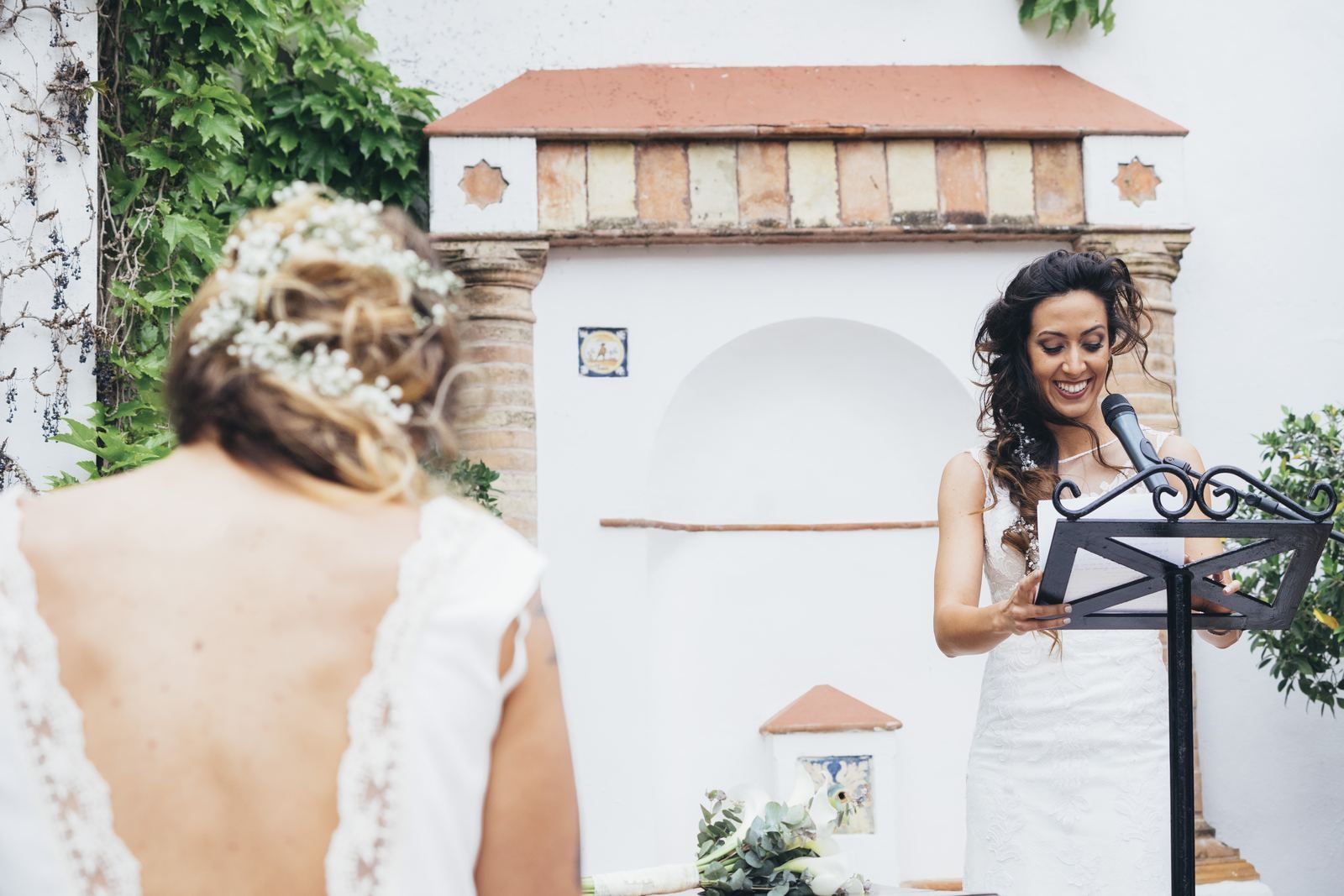
Ask the Church authorities about the exact setting before treating a terrace, garden or chapel photograph as proof that a Catholic marriage can be held there. The physical appearance of a space does not establish the required permission.
ADVICE: if the approved church and reception are separate, plan the journey for your guests. Check arrival arrangements, accessible entrances, seating, the ceremony language and where transport will wait. These are practical questions for the chosen church; this guide does not assign a capacity or access standard to an unverified building.
If an outdoor personal ceremony matters more to you than a Catholic marriage, compare the symbolic and legal ceremony options before booking.
How does the Portuguese civil side connect to the church wedding?
LAW: IRN says the declaration identifies the Catholic form, and the couple, authorised proxy or parish priest can initiate the process. The registrar issues the authorising certificate following the favourable decision or request for that form.[26][27]
LAW: the priest ordinarily needs that certificate before the Catholic marriage; the code contains narrow emergency exceptions. The normal authorisation window is 6 months, checked on 12 November 2026.[28][7]
ADVICE: use the Ireland-to-Portugal legal guide for Irish state documents and the general Portugal marriage guide for the shared civil process. Keep a named owner for the civil certificate so the parish is not left waiting for an item everyone assumed someone else had arranged.

What must happen after the church ceremony?
LAW: the parish priest must send the marriage-record duplicate for civil transcription within 3 days. The current Civil Registry Code specifies 1 day for the registrar's transcription after the applicable receipt or completion trigger; these procedural periods were checked on 12 November 2026.[29][30]
ADVICE: those periods do not promise that your own certificate will be delivered within 4 days. Confirm how you will learn that registration is complete and how you will obtain the civil certificate. Do not leave the task at “the ceremony happened”.
The civil record matters for recognition in Ireland. Keep the marriage certificate with the final confirmation from the relevant office, and ask any organisation receiving it what format it needs.[10]

What are the official marriage fees?
LAW: the ordinary Portuguese marriage process and registration cost €120. The specified outside-registry or out-of-hours civil ceremony is €200 in total, rather than €120 plus €200; registrar transport is provided or its expense agreed separately. The ordinary process fee includes the relevant authorisation certificates; a Catholic church wedding is not automatically charged as a €200 outside-registry civil ceremony. These official figures were read on 12 November 2026.[11]
| Service | Official fee | Scope |
|---|---|---|
| Ordinary registry | €120 | Process and registration[11] |
| Separate civil ceremony | €200 | Specified outside-registry or out-of-hours service[11] |
| Marriage certificate | €10 / €20 | Online / paper, general purposes[31] |
| Irish certificate | €66 | €60 plus €6; per Irish applicant[32] |
LAW: for an application in Ireland, the civil-status certificate is €66 per Irish applicant, including €6 postage and handling. The DFA also publishes an additional €60 late fee; paying it is not a promise of completion by your date.[32] ADVICE: apply within the official guidance window and confirm the fee if you apply through an embassy.
UNKNOWN: the Algarve church tariff remains unverified. ADVICE: obtain the parish’s own written charges and keep those separate from the Portuguese civil process and Irish certificate.[13]
The cited Portuguese tariff entries do not state VAT; the figures above are reproduced as published, without adding or removing tax. ADVICE: budget separately for any translations, authentication, representation and commercial ceremony services your circumstances require. These official fees do not cover the reception.
What should Catholic wedding packages include?
ADVICE: ask for separate written scopes for parish liaison, civil paperwork, preparation, officiant arrangements, church use, music, flowers and guest transport. Check which charges go directly to Church authorities and which are commercial services, with VAT stated by the supplier. No verified Algarve-wide church price is quoted here.
Use the wedding cost index to compare the celebration spending without assuming a reception package includes every church or legal task.
Next step: see the wedding packages, then request your wedding with your guest count, preferred months, home diocese and any church or priest already confirmed.
Questions and answers
Can one of us be non-Catholic?
ADVICE — Church rules: a Catholic marrying a baptised non-Catholic needs the express permission described by canon 1124; an unbaptised partner raises the dispensation requirement in canon 1086. Ask your priest to establish which case applies before confirming the ceremony.[3][4]
Can we take all the approved papers in our luggage?
ADVICE: confirm the transfer method with your home diocese. For example, East Anglia requires direct tracked courier delivery to the receiving diocese, so carrying the folder yourself should not be assumed acceptable.[5]
Is a church freedom letter enough for the Irish civil application?
LAW: the Irish DFA Certificate of Freedom to Marry is a separate civil document. ADVICE: maintain separate church and civil checklists even where the documents have similar names.[6]
Does the Portuguese authorisation last indefinitely?
LAW: the normal period for the wedding is 6 months after the registrar's approval. ADVICE: if the parish date changes, review the civil approval as well as the church papers.[7]
Can we book a church wedding after a legal ceremony at home?
ADVICE: tell both priests that you are already civilly married and show the certificate. East Anglia's published instructions recognise that situation, but the applicable canonical celebration and Algarve requirements must be agreed for your case.[8]
Sources
- Ministério Público — Concordata Portugal / Holy See (2004), accessed . LAW — Portugal recognises civil effects of a canonical marriage when the church marriage entry is transcribed into the civil register (Concordata, article 13).
- Diocese of Cork and Ross — Marriage Abroad, accessed . ADVICE — Confirm the church, date and officiating priest with the Algarve parish and Chancellery before making bookings that depend on the church. The Church treats the destination permission and home preparation as separate steps.
- Holy See — Code of Canon Law, marriage canons, accessed . ADVICE — Canon 1124 requires express ecclesiastical permission for marriage between a Catholic and a baptised non-Catholic.
- Holy See — Code of Canon Law, marriage canons, accessed . ADVICE — Canon 1086 requires dispensation for a marriage between a Catholic and an unbaptised person to be valid.
- Diocese of East Anglia — FAQ: Arranging your Wedding, accessed . ADVICE — East Anglia requires the approved papers to travel directly by tracked courier to the receiving diocese, not by hand with the couple or relatives.
- Irish DFA — Marriage and civil partnership abroad, accessed . LAW — The DFA issues the Certificate of Freedom to Marry, also called a civil letter of freedom, Certificate de Coutume or Nulla Osta. It is separate from a church letter of freedom.
- PGDL — Código do Registo Civil, Decreto-Lei 131/95, current text, accessed . LAW — The wedding must take place within six months after the registrar’s approval (Civil Registration Code, article 145).
- Diocese of East Anglia — FAQ: Arranging your Wedding, accessed . ADVICE — East Anglia asks already civilly married couples to bring their marriage certificate and does not require its freedom declaration from them.
- Diocese of Cork and Ross — Marriage Abroad, accessed . ADVICE — For a wedding abroad, Cork and Ross tells couples to confirm that the destination church and officiant are authorised by the local diocese.
- Irish DFA — Marriage and civil partnership abroad, accessed . LAW — The DFA says recognition in Ireland requires entry in the civil register of the country of celebration and compliance with legal formalities. Retain the Portuguese civil certificate, including after a church wedding.
- IRN — Custos dos serviços: marriage tariffs 3.1–3.5, accessed . LAW — IRN tariff items 3.1–3.5 list €120 for the ordinary marriage process and registration; €200 is the alternative total for a non-urgent marriage requested outside the registry, outside its opening hours, or on Saturdays, Sundays or public holidays. It is not a €200 supplement to €120. In that special category the applicants provide transport or agree the travel expense. The fee includes the process and certificates under Civil Registry Code articles 146 and 163. These tariff entries do not state VAT. Read 12 November 2026.
- Diocese do Algarve — Cúria Diocesana, accessed . ADVICE — The Diocese of Algarve publishes a Chancellery contact in its official Cúria Diocesana directory.
- Diocese do Algarve — Cúria Diocesana, accessed . ADVICE — UNKNOWN: a current complete Algarve church checklist, transfer deadline, approved preparation-course list, translation policy and tariff were not established. The official Chancellery directory provides a contact route for confirmation.
- Diocese of Cork and Ross — Marriage Abroad, accessed . ADVICE — Cork and Ross requires each Catholic to complete a Prenuptial Enquiry Form with a priest of their current parish.
- Diocese of Cork and Ross — Marriage Abroad, accessed . ADVICE — The Cork and Ross baptism certificate must have been issued within the six months before the marriage date.
- Diocese of Cork and Ross — Marriage Abroad, accessed . ADVICE — Cork and Ross requests a confirmation certificate unless confirmation is recorded on the baptism certificate.
- Diocese of Cork and Ross — Marriage Abroad, accessed . ADVICE — Cork and Ross asks for letters of freedom from other parishes where a person lived for more than six months since age 16, excluding college years.
- Diocese of Cork and Ross — Marriage Abroad, accessed . ADVICE — Cork and Ross says marriage abroad does not remove the need for adequate preparation; couples usually provide an approved premarriage-course certificate.
- Diocese of Cork and Ross — Marriage Abroad, accessed . ADVICE — Cork and Ross says to meet the priest to complete the papers at least four months before the wedding.
- Diocese of East Anglia — FAQ: Arranging your Wedding, accessed . ADVICE — East Anglia requires six months’ notice of an intended church marriage.
- Diocese of East Anglia — FAQ: Arranging your Wedding, accessed . ADVICE — East Anglia aims for papers to reach the destination diocese about four weeks before the wedding.
- Diocese of Cork and Ross — Marriage Abroad, accessed . ADVICE — For destinations outside Rome, Cork and Ross sends checked papers to the destination bishop’s office for permission and onward transmission to the parish.
- Diocese of East Anglia — FAQ: Arranging your Wedding, accessed . ADVICE — East Anglia lists ID, preparation certificate, baptism and confirmation records, prenuptial form, freedom declaration and any relevant annulment or existing civil-marriage papers.
- Diário da República — Código do Registo Civil, consolidated, accessed . LAW — A previous marriage must have ended; article 139 governs proof of dissolution, annulment or death. The registrar must assess the supporting records and any recognition needed for a foreign divorce.
- Holy See — Code of Canon Law, marriage canons, accessed . ADVICE — Canon 1118 normally places a marriage of two Catholics, or a Catholic and baptised non-Catholic, in a parish church; other churches or suitable places require the permissions it specifies.
- IRN — Organizar o casamento (updated 28 July 2026), accessed . LAW — IRN says the marriage declaration must identify the Catholic form; the couple, an authorised proxy or the parish priest may initiate the process.
- PGDL — Código do Registo Civil, Decreto-Lei 131/95, current text, accessed . LAW — The registrar issues the certificate authorising a Catholic marriage within one day of the final approval or subsequent request for that form (Civil Registration Code, article 146).
- PGDL — Código do Registo Civil, Decreto-Lei 131/95, current text, accessed . LAW — The priest ordinarily needs the civil certificate before celebrating the Catholic marriage; article 151 sets narrow emergency exceptions.
- PGDL — Código do Registo Civil, Decreto-Lei 131/95, current text, accessed . LAW — The parish priest must send the parish marriage-record duplicate for civil transcription within three days (Civil Registration Code, article 169).
- PGDL — Código do Registo Civil, Decreto-Lei 131/95, current text, accessed . LAW — The current Civil Registration Code gives the registrar one day to transcribe after the applicable receipt or completion trigger (article 172).
- Justiça — Pedir certidão de casamento, accessed . LAW — A Portuguese marriage certificate costs €10 online or €20 on paper for general purposes. The published fee section does not state VAT. Read 12 November 2026.
- Irish DFA — Marriage and civil partnership abroad: fees, accessed . LAW — Irish DFA charges €60 for the civil-status certificate plus €6 postage and handling: €66 per applicant applying in Ireland. Its central guidance lists an additional €60 late fee for applications less than 28 days before the wedding. Official embassy wording differs at exactly 28 days, so that boundary is not asserted. The fee section does not state VAT. Read 12 November 2026.